


In today’s rapidly changing workplace, HR leaders are rethinking traditional recruitment models. One emerging trend that has gained attention is quiet hiring a subtle yet powerful strategy where companies focus on internal talent rather than external recruitment. Instead of bringing in new hires, organizations identify, upskill, and promote existing employees to fill critical roles.
Quiet hiring goes beyond cost efficiency it’s about maximizing the potential of a workforce that already understands the company’s values and culture. By prioritizing internal promotions, HR not only reduces recruitment expenses and onboarding time but also fosters stronger employee loyalty. Employees who see clear pathways for growth are more likely to stay engaged, motivated, and committed to the organization’s success.
However, quiet hiring requires thoughtful execution. It demands continuous learning opportunities, transparent career mapping, and regular skill assessments to ensure employees are ready to step into new responsibilities. Without these, internal promotions may feel like added workloads rather than true opportunities.
For HR, quiet hiring is a chance to position themselves as true talent architects balancing organizational needs with employee aspirations. Done right, it strengthens retention, builds resilience, and creates a culture where growth feels attainable from within.
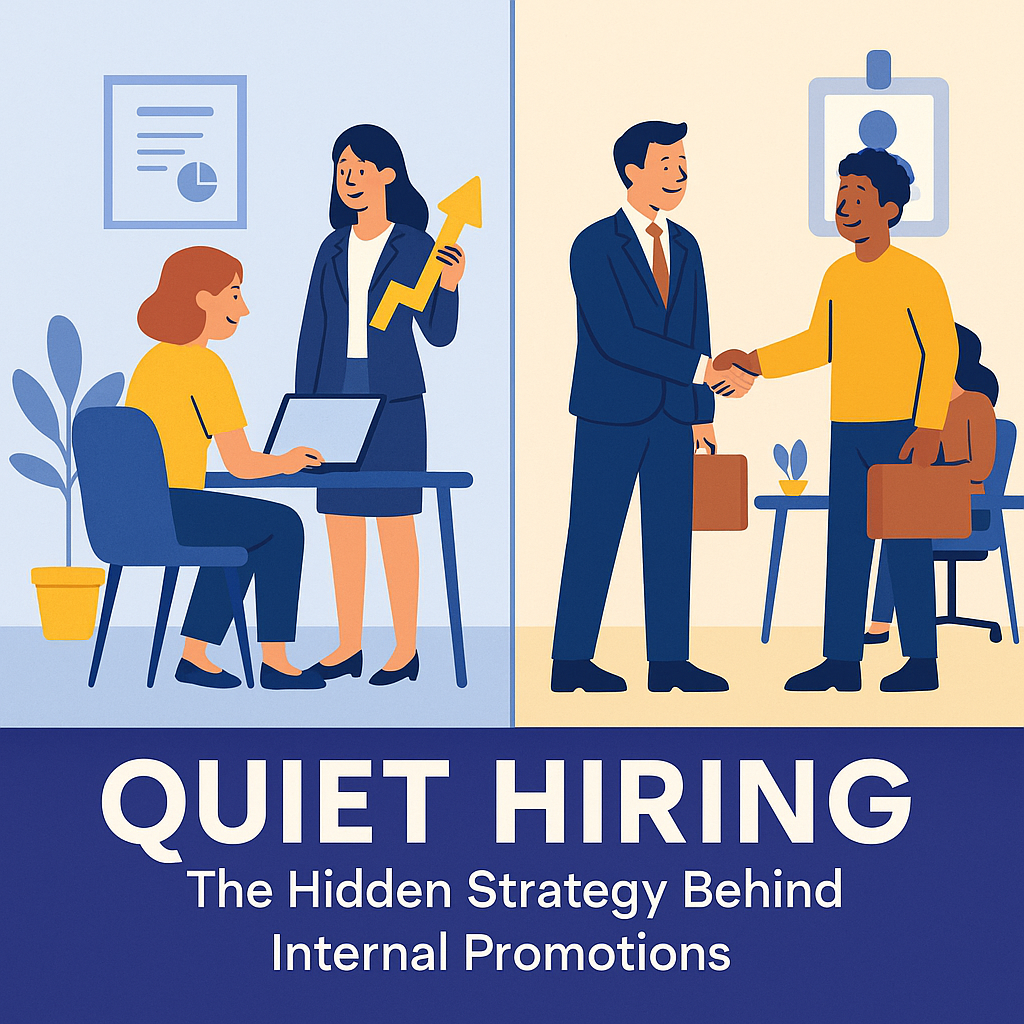
In today’s rapidly changing workplace, HR leaders are rethinking traditional recruitment models. One emerging trend that has gained attention is quiet hiring a subtle yet powerful strategy where companies focus on internal talent rather than external recruitment. Instead of bringing in new hires, organizations identify, upskill, and promote existing employees to fill critical roles.
Quiet hiring goes beyond cost efficiency it’s about maximizing the potential of a workforce that already understands the company’s values and culture. By prioritizing internal promotions, HR not only reduces recruitment expenses and onboarding time but also fosters stronger employee loyalty. Employees who see clear pathways for growth are more likely to stay engaged, motivated, and committed to the organization’s success.
However, quiet hiring requires thoughtful execution. It demands continuous learning opportunities, transparent career mapping, and regular skill assessments to ensure employees are ready to step into new responsibilities. Without these, internal promotions may feel like added workloads rather than true opportunities.
For HR, quiet hiring is a chance to position themselves as true talent architects balancing organizational needs with employee aspirations. Done right, it strengthens retention, builds resilience, and creates a culture where growth feels attainable from within.