


In today’s dynamic business landscape, HR is no longer confined to policies, payroll, and hiring. Instead, HR professionals have become culture architects the ones who design, shape, and nurture the very DNA of a workplace. A company’s culture is not built by accident; it is deliberately cultivated through values, rituals, communication, and the way people are empowered to perform their roles.
An inspiring workplace culture starts with clarity of purpose. When employees know why the company exists and how their individual efforts contribute to the larger vision, it sparks a sense of belonging. HR plays a pivotal role in translating that vision into everyday practices from onboarding programs that set the tone of inclusion, to recognition systems that celebrate both big wins and small contributions.
Beyond policies, HR leaders influence the emotional and psychological environment of the workplace. They have the power to foster empathy, collaboration, and innovation by ensuring that teams feel supported, heard, and trusted. When HR focuses on designing environments where employees can be themselves, share ideas freely, and grow without fear of failure, inspiration naturally flows.
The workplaces that stand out are not just the ones with modern interiors or flexible hours; they are the ones where employees feel proud to be a part of something bigger than themselves. HR, as culture architects, ensures that organizations don’t just operate they inspire. And when inspiration becomes culture, employees don’t just stay; they thrive.
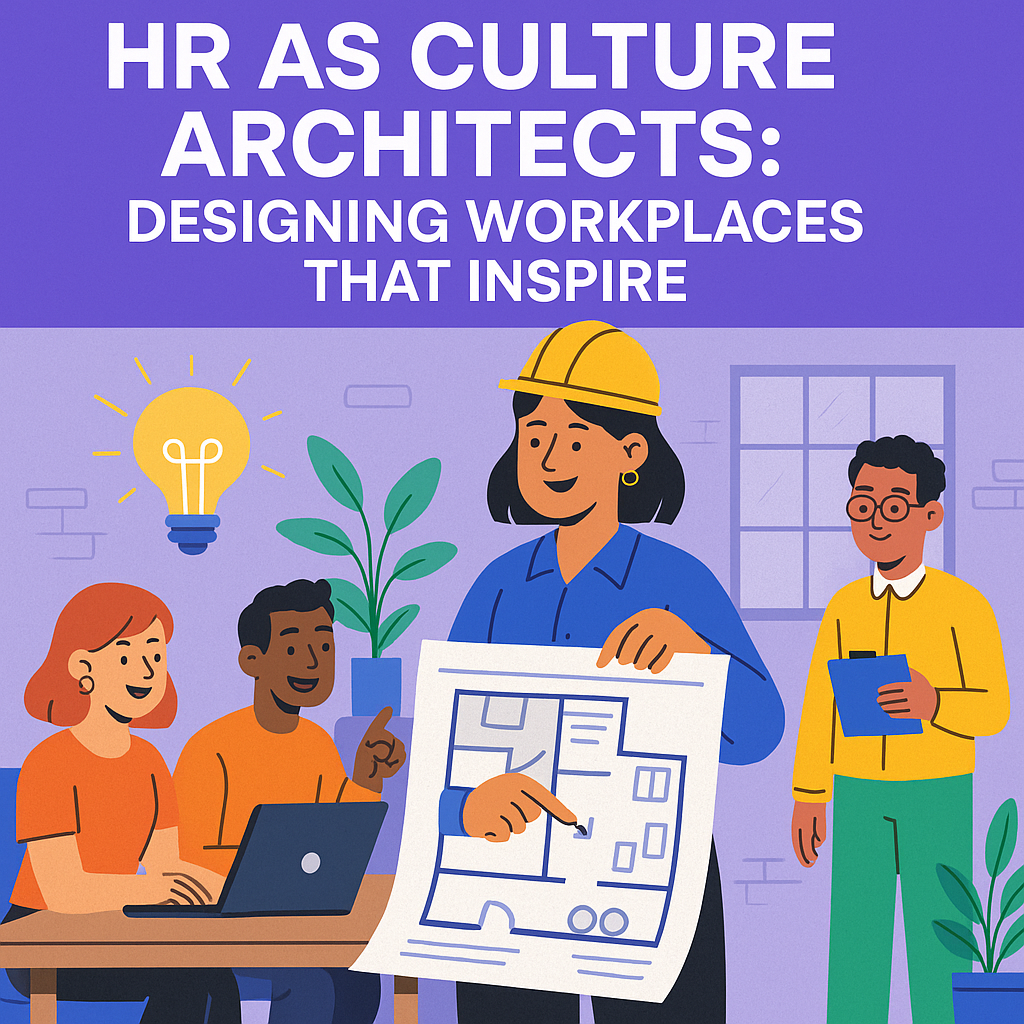
In today’s dynamic business landscape, HR is no longer confined to policies, payroll, and hiring. Instead, HR professionals have become culture architects the ones who design, shape, and nurture the very DNA of a workplace. A company’s culture is not built by accident; it is deliberately cultivated through values, rituals, communication, and the way people are empowered to perform their roles.
An inspiring workplace culture starts with clarity of purpose. When employees know why the company exists and how their individual efforts contribute to the larger vision, it sparks a sense of belonging. HR plays a pivotal role in translating that vision into everyday practices from onboarding programs that set the tone of inclusion, to recognition systems that celebrate both big wins and small contributions.
Beyond policies, HR leaders influence the emotional and psychological environment of the workplace. They have the power to foster empathy, collaboration, and innovation by ensuring that teams feel supported, heard, and trusted. When HR focuses on designing environments where employees can be themselves, share ideas freely, and grow without fear of failure, inspiration naturally flows.
The workplaces that stand out are not just the ones with modern interiors or flexible hours; they are the ones where employees feel proud to be a part of something bigger than themselves. HR, as culture architects, ensures that organizations don’t just operate they inspire. And when inspiration becomes culture, employees don’t just stay; they thrive.