


For decades, job descriptions have been the first touchpoint between companies and potential employees. They’ve typically listed tasks, responsibilities, and requirements but in today’s competitive market, that’s no longer enough. Top talent isn’t just looking for a role; they’re looking for a journey.
Shifting from job descriptions to career journeys means showing candidates a vision of growth within your organization. Instead of simply stating what they’ll do on day one, paint a picture of where they could be in three years. Highlight potential career paths, learning opportunities, and mentorship programs. This approach turns a static job listing into a compelling invitation to build a future together.
For HR, this requires close collaboration with managers and leadership to map out development paths and ensure they’re realistic. It also means rethinking the language used in recruitment marketing focusing on purpose, impact, and long-term value instead of just duties and skills.
When candidates can see themselves thriving and evolving within your company, they’re more likely to join and stay. In a world where talent has more choices than ever, offering a career journey instead of a checklist could be the differentiator your organization needs.
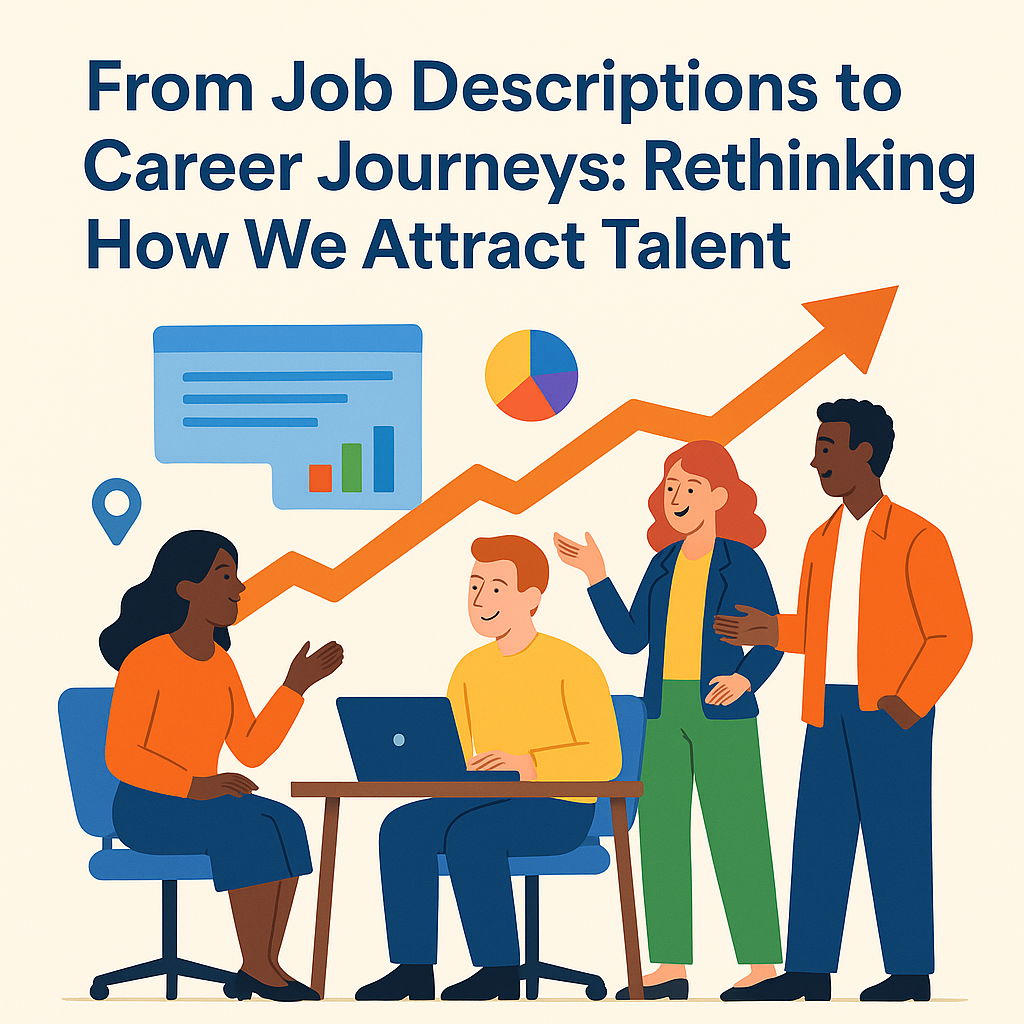
For decades, job descriptions have been the first touchpoint between companies and potential employees. They’ve typically listed tasks, responsibilities, and requirements but in today’s competitive market, that’s no longer enough. Top talent isn’t just looking for a role; they’re looking for a journey.
Shifting from job descriptions to career journeys means showing candidates a vision of growth within your organization. Instead of simply stating what they’ll do on day one, paint a picture of where they could be in three years. Highlight potential career paths, learning opportunities, and mentorship programs. This approach turns a static job listing into a compelling invitation to build a future together.
For HR, this requires close collaboration with managers and leadership to map out development paths and ensure they’re realistic. It also means rethinking the language used in recruitment marketing focusing on purpose, impact, and long-term value instead of just duties and skills.
When candidates can see themselves thriving and evolving within your company, they’re more likely to join and stay. In a world where talent has more choices than ever, offering a career journey instead of a checklist could be the differentiator your organization needs.