


It’s a common workplace story: a top performer is promoted to a management role, only to struggle and sometimes fail in their new position. On paper, it makes sense. They’ve mastered their individual role, exceeded targets, and shown dedication. But the truth is, excelling at a job doesn’t always mean you’ll excel at leading others.
Great performers often thrive on personal achievement, autonomy, and control over their own work. Management, on the other hand, demands an entirely different skill set empathy, delegation, conflict resolution, and the ability to inspire a team. Without proper training and support, the very traits that made them star employees can become obstacles in their leadership journey.
This mismatch doesn’t just hurt the manager it affects the entire team. Employees may feel micromanaged, unsupported, or even demotivated under a leader who lacks people skills. That’s why HR must rethink promotions. Leadership potential should be evaluated based on communication, emotional intelligence, and the ability to coach, not just individual performance metrics.
The lesson is clear: leadership is a skill, not a reward. With proper mentoring, training, and role readiness assessments, great performers can transition into great managers. But without these safeguards, companies risk losing not only a top performer but also the trust and morale of their teams.
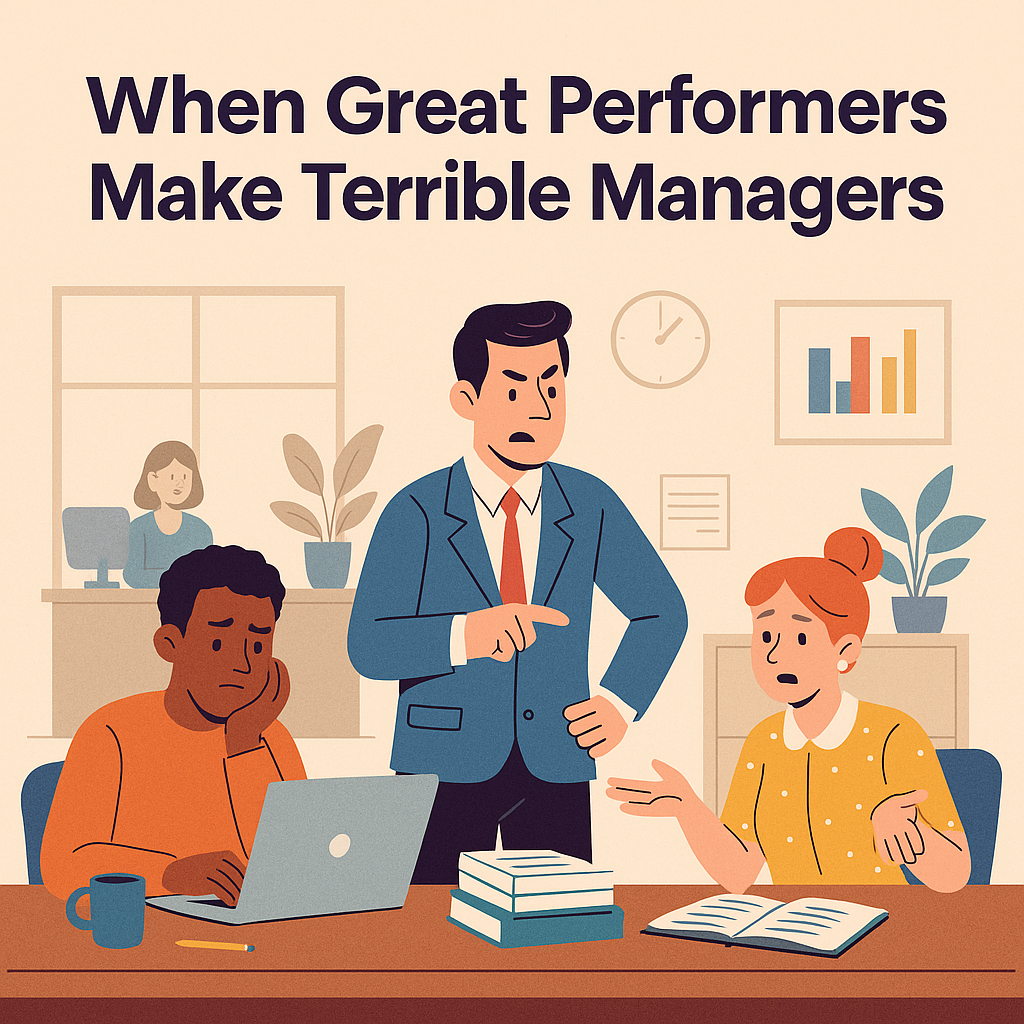
It’s a common workplace story: a top performer is promoted to a management role, only to struggle and sometimes fail in their new position. On paper, it makes sense. They’ve mastered their individual role, exceeded targets, and shown dedication. But the truth is, excelling at a job doesn’t always mean you’ll excel at leading others.
Great performers often thrive on personal achievement, autonomy, and control over their own work. Management, on the other hand, demands an entirely different skill set empathy, delegation, conflict resolution, and the ability to inspire a team. Without proper training and support, the very traits that made them star employees can become obstacles in their leadership journey.
This mismatch doesn’t just hurt the manager it affects the entire team. Employees may feel micromanaged, unsupported, or even demotivated under a leader who lacks people skills. That’s why HR must rethink promotions. Leadership potential should be evaluated based on communication, emotional intelligence, and the ability to coach, not just individual performance metrics.
The lesson is clear: leadership is a skill, not a reward. With proper mentoring, training, and role readiness assessments, great performers can transition into great managers. But without these safeguards, companies risk losing not only a top performer but also the trust and morale of their teams.