


From leaderboards to achievement badges, gamification has become a buzzword in the HR world. The idea is simple use game like elements to make work more engaging, competitive, and fun. But beyond the hype, the question remains: Does gamification actually improve employee engagement, or is it just a novelty that fades over time?
When done well, gamification taps into intrinsic motivators like recognition, accomplishment, and progress. Employees may feel more motivated to complete training, hit sales goals, or collaborate with peers when their efforts are visibly rewarded. It can also create a sense of community through friendly competition and shared achievements.
However, gamification is not a magic wand. If the rewards feel superficial, the system becomes overly competitive, or the “game” overshadows the actual work, engagement can backfire. True success comes when gamification is aligned with company values, offers meaningful incentives, and focuses on collective growth rather than individual wins.
In the end, gamification isn’t about turning work into a game it’s about using game-inspired design to make work more rewarding and purpose driven. When combined with strong leadership and a healthy culture, it can be a powerful tool for engagement. Without that foundation, it risks being just another HR fad.
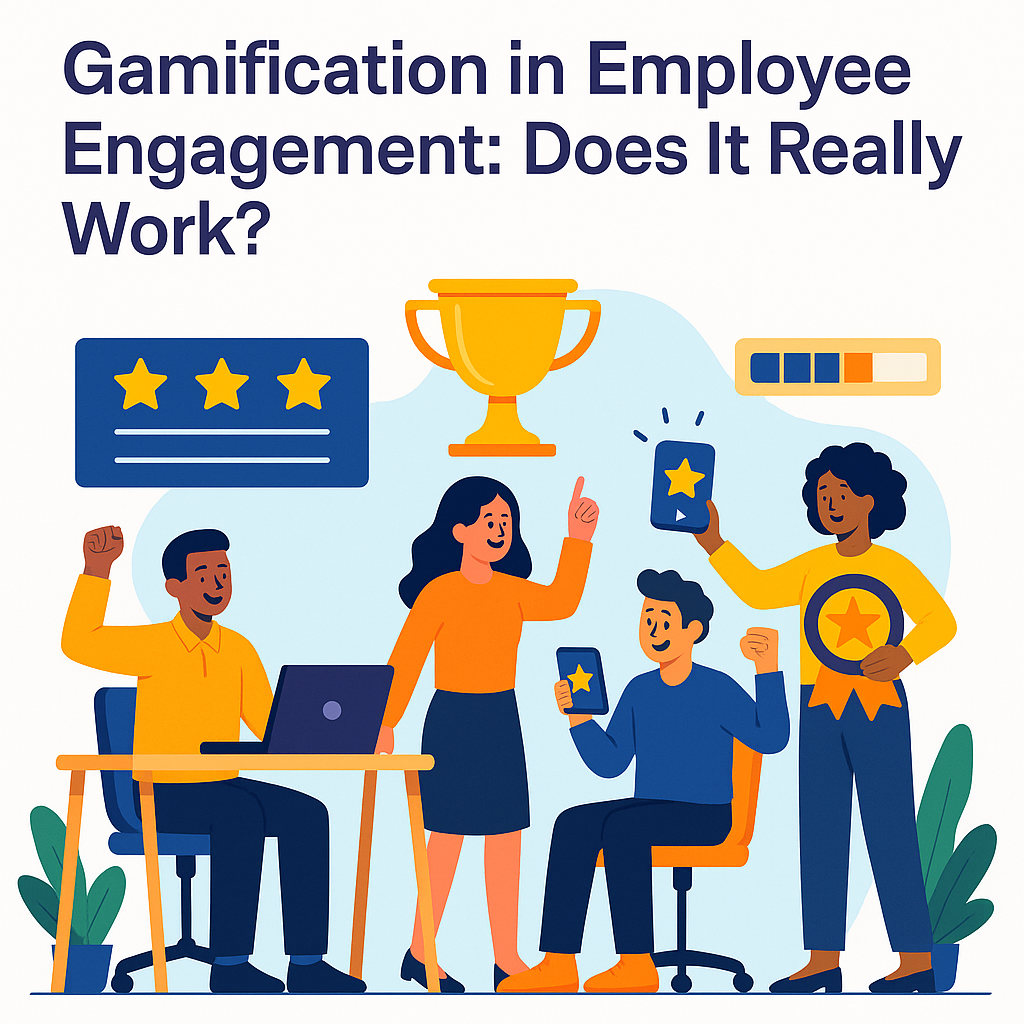
From leaderboards to achievement badges, gamification has become a buzzword in the HR world. The idea is simple use game like elements to make work more engaging, competitive, and fun. But beyond the hype, the question remains: Does gamification actually improve employee engagement, or is it just a novelty that fades over time?
When done well, gamification taps into intrinsic motivators like recognition, accomplishment, and progress. Employees may feel more motivated to complete training, hit sales goals, or collaborate with peers when their efforts are visibly rewarded. It can also create a sense of community through friendly competition and shared achievements.
However, gamification is not a magic wand. If the rewards feel superficial, the system becomes overly competitive, or the “game” overshadows the actual work, engagement can backfire. True success comes when gamification is aligned with company values, offers meaningful incentives, and focuses on collective growth rather than individual wins.
In the end, gamification isn’t about turning work into a game it’s about using game-inspired design to make work more rewarding and purpose driven. When combined with strong leadership and a healthy culture, it can be a powerful tool for engagement. Without that foundation, it risks being just another HR fad.