


Gone are the days when a rigid 9-to-5 schedule was the hallmark of professionalism. In today’s post-pandemic, tech-enabled world, the biggest currency in the workplace is flexibility. Employees no longer equate loyalty with clocking in on time they associate it with being trusted to manage their own time, priorities, and productivity. And for HR, this shift isn’t a trend it’s a transformation.
Flexible work hours, remote-first setups, four-day workweeks, and asynchronous collaboration are becoming the norm in forward-thinking companies. When employees are given the freedom to choose how and when they work best, they respond with stronger commitment, higher output, and deeper trust. It’s no surprise that flexibility is now cited as one of the top reasons people stay in a job.
But flexibility isn’t just a perk it’s a strategy. HR teams must be intentional about policies that support different work styles while ensuring fairness and accountability. It’s about balancing autonomy with alignment. From redefining productivity metrics to training managers in outcome-based leadership, HR’s role is to create a structure where flexibility doesn’t mean chaos it means choice.
In this new world of work, loyalty isn’t built by presence it’s built by permission. The permission to work where you’re most productive, the permission to live a balanced life, and the permission to be human at work. The companies that understand this will attract and retain the talent of tomorrow.
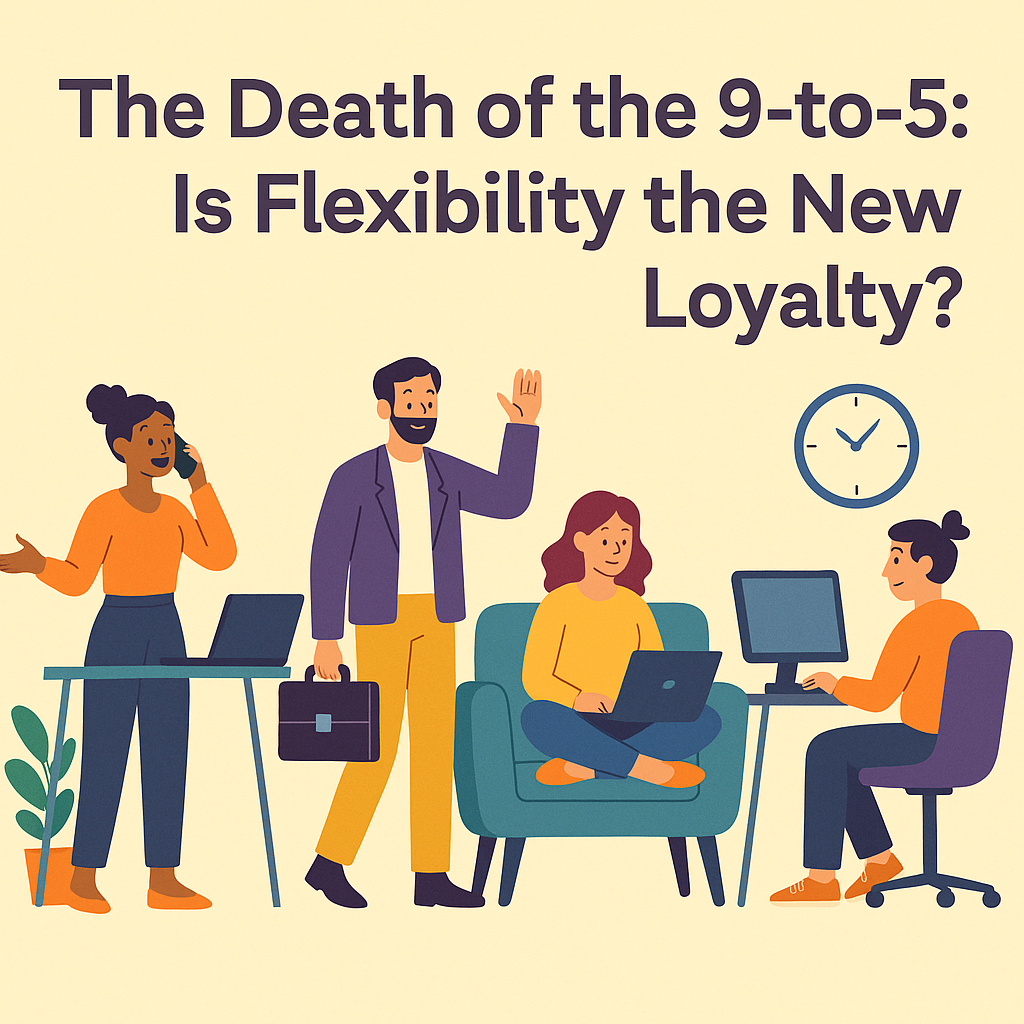
Gone are the days when a rigid 9-to-5 schedule was the hallmark of professionalism. In today’s post-pandemic, tech-enabled world, the biggest currency in the workplace is flexibility. Employees no longer equate loyalty with clocking in on time they associate it with being trusted to manage their own time, priorities, and productivity. And for HR, this shift isn’t a trend it’s a transformation.
Flexible work hours, remote-first setups, four-day workweeks, and asynchronous collaboration are becoming the norm in forward-thinking companies. When employees are given the freedom to choose how and when they work best, they respond with stronger commitment, higher output, and deeper trust. It’s no surprise that flexibility is now cited as one of the top reasons people stay in a job.
But flexibility isn’t just a perk it’s a strategy. HR teams must be intentional about policies that support different work styles while ensuring fairness and accountability. It’s about balancing autonomy with alignment. From redefining productivity metrics to training managers in outcome-based leadership, HR’s role is to create a structure where flexibility doesn’t mean chaos it means choice.
In this new world of work, loyalty isn’t built by presence it’s built by permission. The permission to work where you’re most productive, the permission to live a balanced life, and the permission to be human at work. The companies that understand this will attract and retain the talent of tomorrow.