


In remote workspaces, we no longer have the luxury of hallway chats, spontaneous smiles, or raised eyebrows to decode how someone feels. Instead, we rely on tiny digital signals typing speed, response time, emoji use, even punctuation to understand tone and intent. This new form of communication, often called “digital body language,” is the silent language of modern teams. But are we reading it right?
A delayed reply doesn’t always mean disinterest. A period at the end of a sentence may feel cold to one person and simply polite to another. In this landscape, misinterpretations are common, and they’re quietly eroding trust and collaboration. That’s why HR leaders and team managers must train themselves to tune into digital cues just as they would with physical presence.
Reading digital body language means noticing patterns. Does someone always reply late, or is it new? Are they quieter in meetings but active on chat? Do they avoid video calls but respond well to written feedback? These clues help managers detect burnout, disengagement, or even silent conflict before it becomes a performance issue. More importantly, they help create space for empathy and honest dialogue.
In a remote first world, emotional intelligence has gone digital. The most effective HR teams today aren’t just rule enforcers they’re quiet observers of behavior across platforms. And those who can interpret this new language are the ones keeping virtual teams connected, supported, and human.
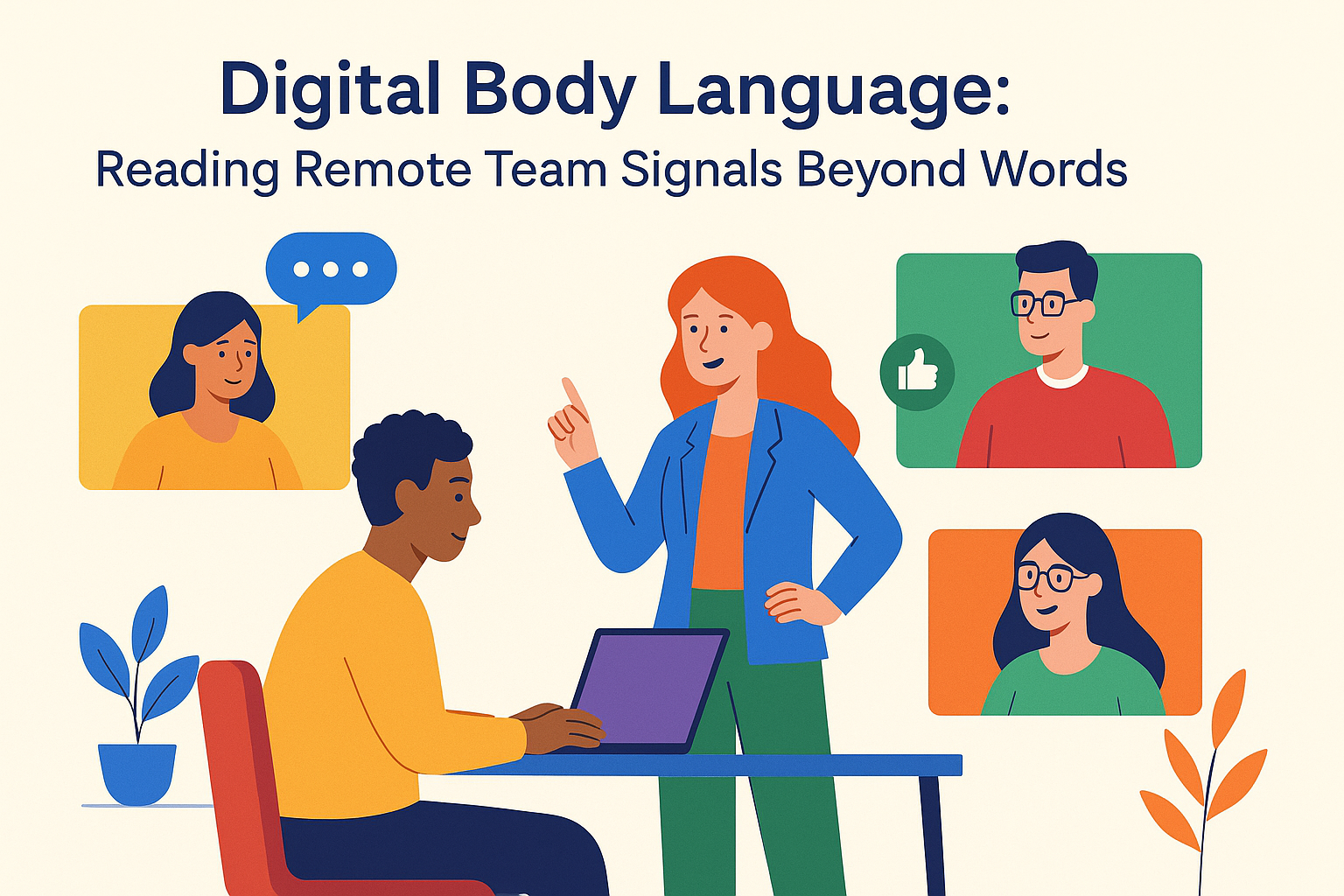
In remote workspaces, we no longer have the luxury of hallway chats, spontaneous smiles, or raised eyebrows to decode how someone feels. Instead, we rely on tiny digital signals typing speed, response time, emoji use, even punctuation to understand tone and intent. This new form of communication, often called “digital body language,” is the silent language of modern teams. But are we reading it right?
A delayed reply doesn’t always mean disinterest. A period at the end of a sentence may feel cold to one person and simply polite to another. In this landscape, misinterpretations are common, and they’re quietly eroding trust and collaboration. That’s why HR leaders and team managers must train themselves to tune into digital cues just as they would with physical presence.
Reading digital body language means noticing patterns. Does someone always reply late, or is it new? Are they quieter in meetings but active on chat? Do they avoid video calls but respond well to written feedback? These clues help managers detect burnout, disengagement, or even silent conflict before it becomes a performance issue. More importantly, they help create space for empathy and honest dialogue.
In a remote first world, emotional intelligence has gone digital. The most effective HR teams today aren’t just rule enforcers they’re quiet observers of behavior across platforms. And those who can interpret this new language are the ones keeping virtual teams connected, supported, and human.