


For years, “culture fit” has been the gold standard in hiring. Recruiters and managers often searched for candidates who aligned closely with the team’s values, personality, and way of working. But somewhere along the way, culture fit began to act as an invisible filter unintentionally narrowing diversity and limiting innovation. Today, progressive organizations are rethinking that mindset and shifting toward a more inclusive and forward-looking approach: hiring for culture add.
Hiring for culture add means bringing in people who will enrich and expand your current team dynamic, not just mirror it. Instead of asking, “Will this person blend in?” the new question becomes, “What unique perspective will they bring?” It’s about building teams that don’t just gel, but grow fueled by differences in thought, experience, background, and personality.
The danger of hiring only for culture fit is that it can lead to homogeny everyone thinking the same, working the same, and solving problems the same way. This might create short-term harmony, but it often results in groupthink and missed opportunities. On the other hand, when you hire someone who challenges your usual way of doing things respectfully and constructively you open the door to real progress and innovation. Culture add hires question assumptions, spot blind spots, and help your team evolve.
This doesn’t mean you should hire someone completely misaligned with your company’s core values. Culture add isn’t about conflict it’s about complementary strength. You still want employees who believe in your mission and operate with integrity. But within that shared foundation, there’s plenty of room for fresh energy, diverse voices, and different life experiences.
Practically speaking, hiring for culture add starts with shifting your interview questions. Instead of only asking candidates how they align with your team, ask how they’ve contributed to different cultures in the past. What perspectives do they bring that are often underrepresented? What do they believe your company might be missing? It also means training hiring managers to recognize unconscious bias especially the instinct to choose someone simply because they feel “familiar” or “easy to work with.”
When done right, this approach leads to more dynamic teams, stronger collaboration, and better business outcomes. In a world where innovation is everything, the most successful companies aren’t made of identical puzzle pieces they’re built from a rich mosaic of talent.
In conclusion, culture fit might feel safe, but culture add is where the magic happens. By widening the lens through which you view potential hires, you don’t just find great employees you build teams that reflect the world you serve. And that’s not just good HR it’s smart business.
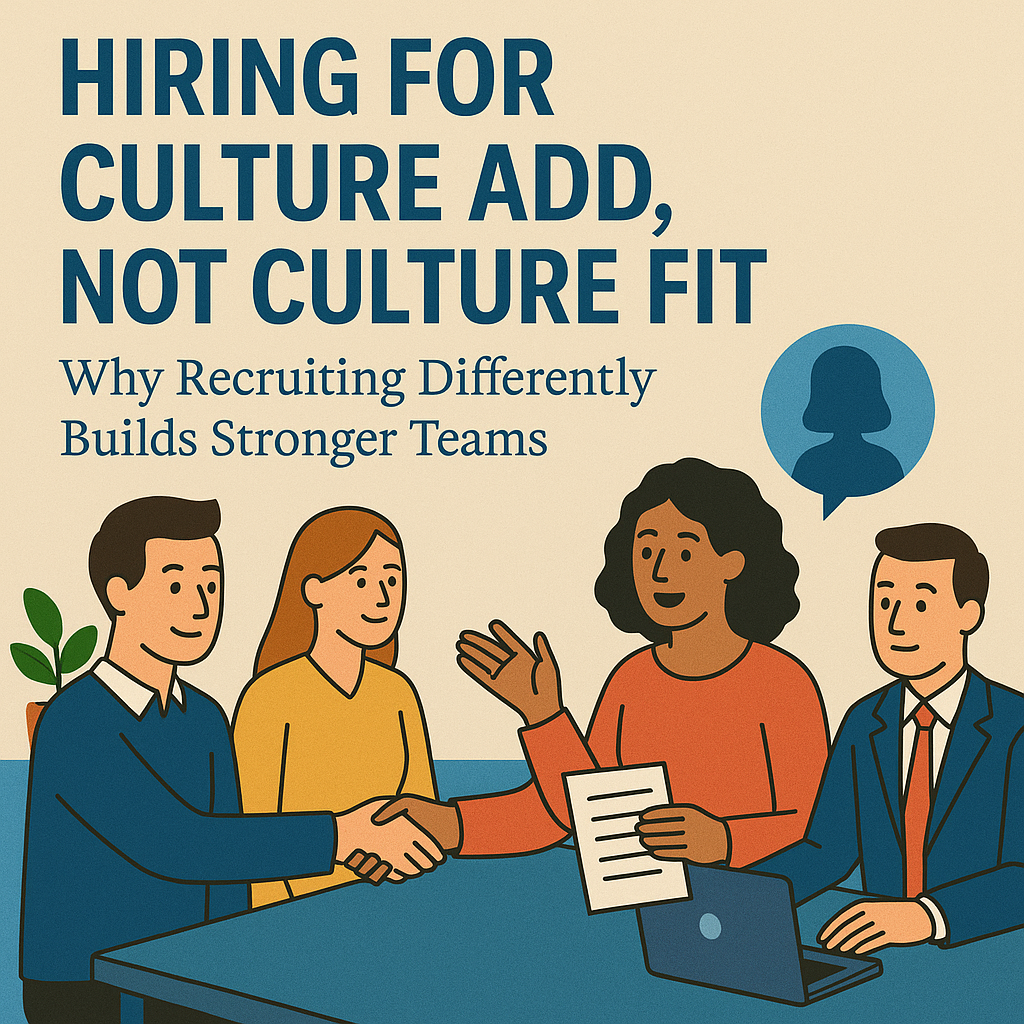
For years, “culture fit” has been the gold standard in hiring. Recruiters and managers often searched for candidates who aligned closely with the team’s values, personality, and way of working. But somewhere along the way, culture fit began to act as an invisible filter unintentionally narrowing diversity and limiting innovation. Today, progressive organizations are rethinking that mindset and shifting toward a more inclusive and forward-looking approach: hiring for culture add.
Hiring for culture add means bringing in people who will enrich and expand your current team dynamic, not just mirror it. Instead of asking, “Will this person blend in?” the new question becomes, “What unique perspective will they bring?” It’s about building teams that don’t just gel, but grow fueled by differences in thought, experience, background, and personality.
The danger of hiring only for culture fit is that it can lead to homogeny everyone thinking the same, working the same, and solving problems the same way. This might create short-term harmony, but it often results in groupthink and missed opportunities. On the other hand, when you hire someone who challenges your usual way of doing things respectfully and constructively you open the door to real progress and innovation. Culture add hires question assumptions, spot blind spots, and help your team evolve.
This doesn’t mean you should hire someone completely misaligned with your company’s core values. Culture add isn’t about conflict it’s about complementary strength. You still want employees who believe in your mission and operate with integrity. But within that shared foundation, there’s plenty of room for fresh energy, diverse voices, and different life experiences.
Practically speaking, hiring for culture add starts with shifting your interview questions. Instead of only asking candidates how they align with your team, ask how they’ve contributed to different cultures in the past. What perspectives do they bring that are often underrepresented? What do they believe your company might be missing? It also means training hiring managers to recognize unconscious bias especially the instinct to choose someone simply because they feel “familiar” or “easy to work with.”
When done right, this approach leads to more dynamic teams, stronger collaboration, and better business outcomes. In a world where innovation is everything, the most successful companies aren’t made of identical puzzle pieces they’re built from a rich mosaic of talent.
In conclusion, culture fit might feel safe, but culture add is where the magic happens. By widening the lens through which you view potential hires, you don’t just find great employees you build teams that reflect the world you serve. And that’s not just good HR it’s smart business.