


Leaving a toxic workplace isn’t just about changing jobs it’s about healing from emotional damage that lingers long after the exit. Employees who come from such environments often carry invisible scars: fear of speaking up, lack of trust in management, imposter syndrome, and anxiety around basic workplace interactions. These individuals don’t just need a new role they need a space to recover, rebuild, and feel safe again. And that’s where HR becomes more than a department it becomes a lifeline.
The first step for HR is to recognize that not every new hire is starting from zero; some are starting from below it. When someone has experienced toxic leadership, gaslighting, overwork, or workplace bullying, their guard is up even in healthy environments. HR teams must lead with empathy, patience, and proactive care. This means more than the usual “Welcome Aboard” it’s about emotionally intelligent onboarding. Checking in regularly, offering resources for mental well-being, encouraging open communication, and creating low-pressure spaces for feedback can all help build the foundation of psychological safety.
Culture plays an equally critical role. Employees in recovery are looking for proof not promises that this new workplace is different. HR must help foster a transparent, inclusive, and respectful environment where feedback is constructive, leadership is supportive, and communication is clear and honest. When people see accountability in action and feel heard without judgment, they begin to let go of their past fears.
Healing also requires time. HR teams should avoid rushing the integration process. It’s okay if a new employee is slow to open up in meetings, hesitant to lead projects, or wary of authority. With the right environment and support, trust is rebuilt not overnight, but one small interaction at a time. HR can play a quiet but powerful role in that transformation.
In conclusion, toxic workplaces might break people, but healthy workplaces can help put them back together. HR’s role in this process isn’t just procedural it’s deeply human. By choosing empathy over efficiency and compassion over protocol, HR professionals have the power to turn someone’s fresh start into a true beginning one where they feel safe, seen, and strong again.
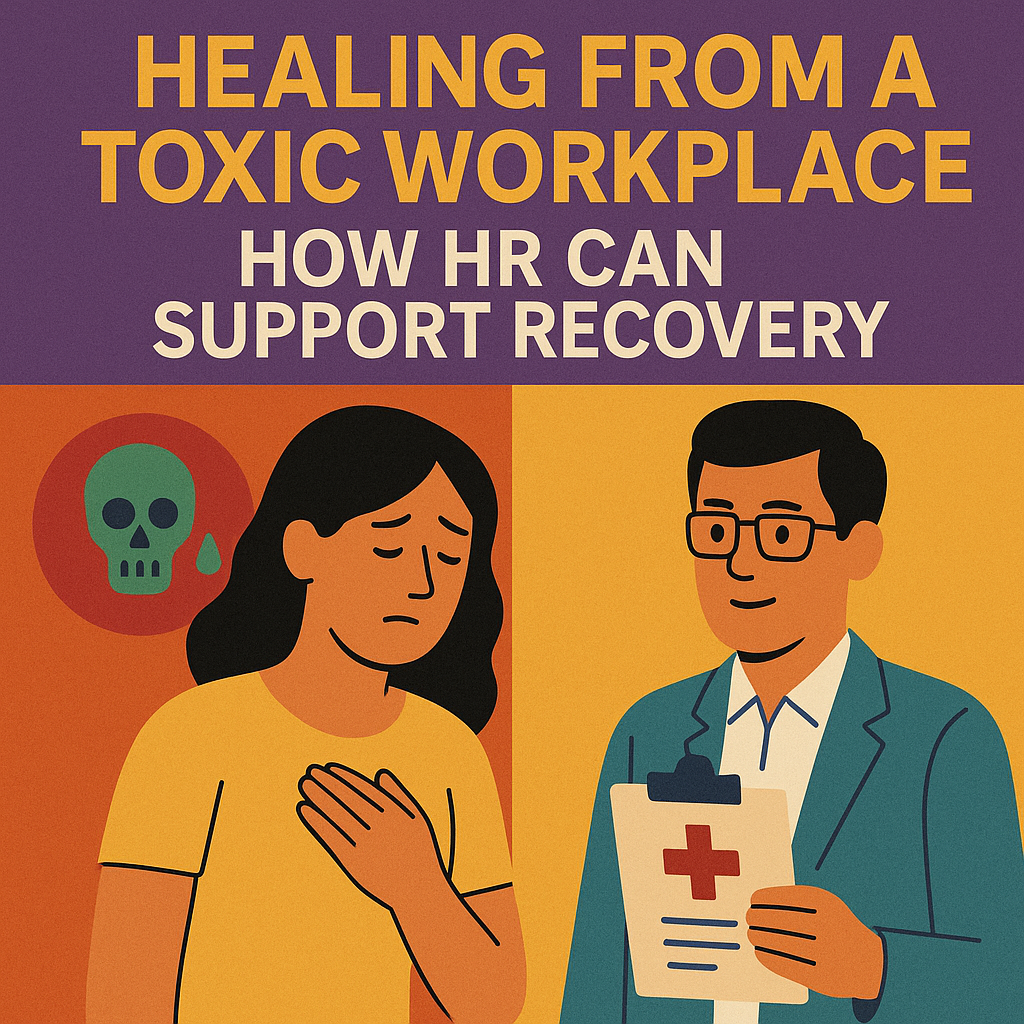
Leaving a toxic workplace isn’t just about changing jobs it’s about healing from emotional damage that lingers long after the exit. Employees who come from such environments often carry invisible scars: fear of speaking up, lack of trust in management, imposter syndrome, and anxiety around basic workplace interactions. These individuals don’t just need a new role they need a space to recover, rebuild, and feel safe again. And that’s where HR becomes more than a department it becomes a lifeline.
The first step for HR is to recognize that not every new hire is starting from zero; some are starting from below it. When someone has experienced toxic leadership, gaslighting, overwork, or workplace bullying, their guard is up even in healthy environments. HR teams must lead with empathy, patience, and proactive care. This means more than the usual “Welcome Aboard” it’s about emotionally intelligent onboarding. Checking in regularly, offering resources for mental well-being, encouraging open communication, and creating low-pressure spaces for feedback can all help build the foundation of psychological safety.
Culture plays an equally critical role. Employees in recovery are looking for proof not promises that this new workplace is different. HR must help foster a transparent, inclusive, and respectful environment where feedback is constructive, leadership is supportive, and communication is clear and honest. When people see accountability in action and feel heard without judgment, they begin to let go of their past fears.
Healing also requires time. HR teams should avoid rushing the integration process. It’s okay if a new employee is slow to open up in meetings, hesitant to lead projects, or wary of authority. With the right environment and support, trust is rebuilt not overnight, but one small interaction at a time. HR can play a quiet but powerful role in that transformation.
In conclusion, toxic workplaces might break people, but healthy workplaces can help put them back together. HR’s role in this process isn’t just procedural it’s deeply human. By choosing empathy over efficiency and compassion over protocol, HR professionals have the power to turn someone’s fresh start into a true beginning one where they feel safe, seen, and strong again.