


For years, Human Resources has been stereotyped as the department of rules, policies, and compliance. But the new-age HR leader is far more than that they’re the architects of company culture, shaping how people feel, work, and grow within the organization.
Culture isn’t built by ping pong tables or dress codes. It’s built in the everyday moments how feedback is given, how conflict is resolved, how wins are celebrated, and how failures are handled. And HR sits at the heart of these moments. From onboarding to exit interviews, HR has the power to shape narratives, mindsets, and trust.
Modern HR teams are co-creating value-driven cultures. They’re designing rituals that resonate, championing diversity beyond checkboxes, and embedding empathy into every stage of the employee journey. They’re the ones encouraging vulnerability in leadership, reimagining performance reviews, and turning workplaces into communities.
It’s time we move past the “rule enforcer” label. HR is not just about preventing problems; it’s about creating possibilities for people to feel seen, heard, and empowered. And in doing so, they lay the foundation for organizations where people don’t just work they belong.
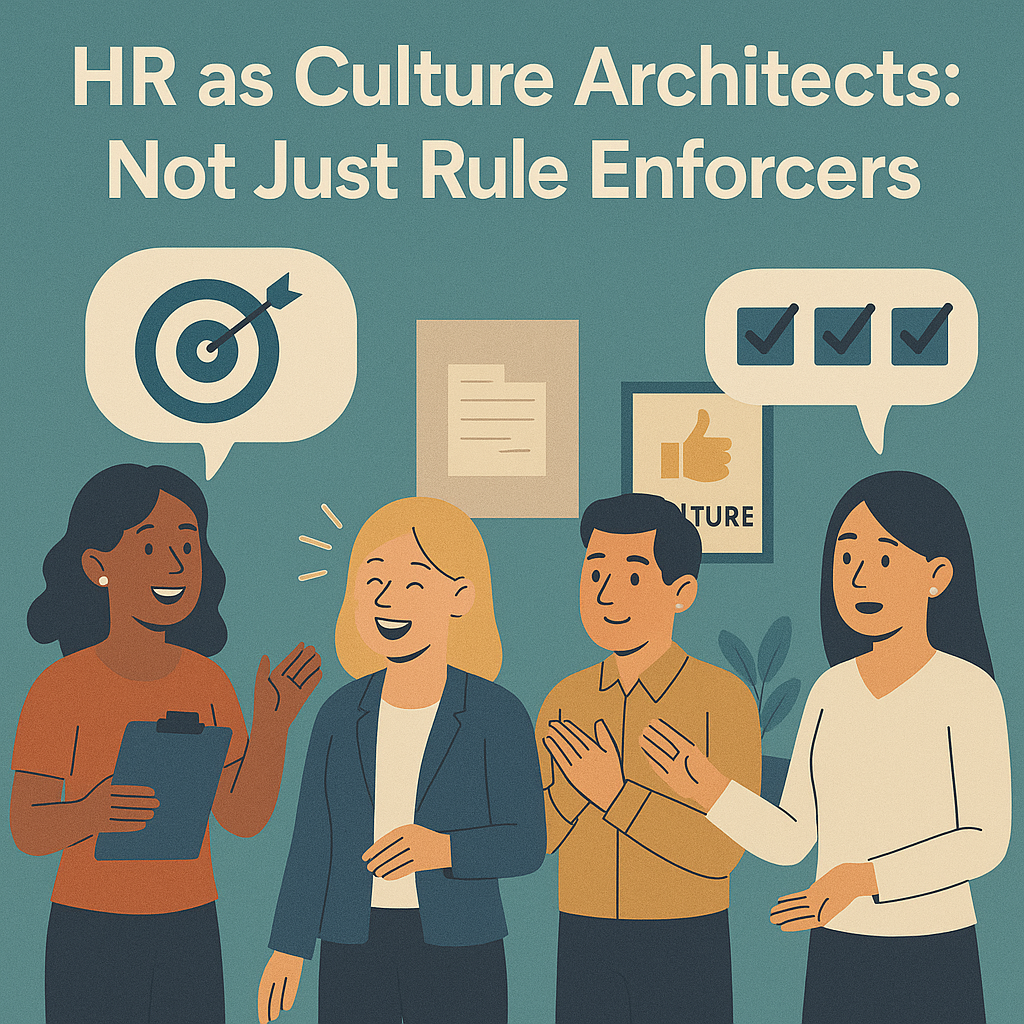
For years, Human Resources has been stereotyped as the department of rules, policies, and compliance. But the new-age HR leader is far more than that they’re the architects of company culture, shaping how people feel, work, and grow within the organization.
Culture isn’t built by ping pong tables or dress codes. It’s built in the everyday moments how feedback is given, how conflict is resolved, how wins are celebrated, and how failures are handled. And HR sits at the heart of these moments. From onboarding to exit interviews, HR has the power to shape narratives, mindsets, and trust.
Modern HR teams are co-creating value-driven cultures. They’re designing rituals that resonate, championing diversity beyond checkboxes, and embedding empathy into every stage of the employee journey. They’re the ones encouraging vulnerability in leadership, reimagining performance reviews, and turning workplaces into communities.
It’s time we move past the “rule enforcer” label. HR is not just about preventing problems; it’s about creating possibilities for people to feel seen, heard, and empowered. And in doing so, they lay the foundation for organizations where people don’t just work they belong.