


Not all work is visible on a timesheet. Beyond deadlines, deliverables, and meetings lies an often unacknowledged burden the mental load. It’s the to do list running in the background: remembering follow-ups, anticipating team needs, emotional labor, and constantly switching between tasks. Over time, this invisible workload becomes a major contributor to employee burnout.
Employees may look calm on the outside, yet mentally they’re juggling ten things at once keeping track of emails, project nuances, client expectations, and even office dynamics. This cognitive overload leads to fatigue, reduced focus, and emotional exhaustion. What’s worse, it often goes unnoticed because it doesn’t appear on dashboards or daily reports.
So, what can HR and leadership do? The first step is acknowledgement create safe spaces for conversations about mental strain. Encourage managers to check in regularly, not just about performance but about capacity. Promote task clarity, reasonable workloads, and realistic deadlines. Small acts like simplifying processes, reducing unnecessary meetings, or rotating responsibilities can ease the hidden burden.
Mental load is real. It drains energy, stifles creativity, and slowly chips away at motivation. By making the invisible visible, organizations can foster healthier workplaces where burnout is the exception not the norm.
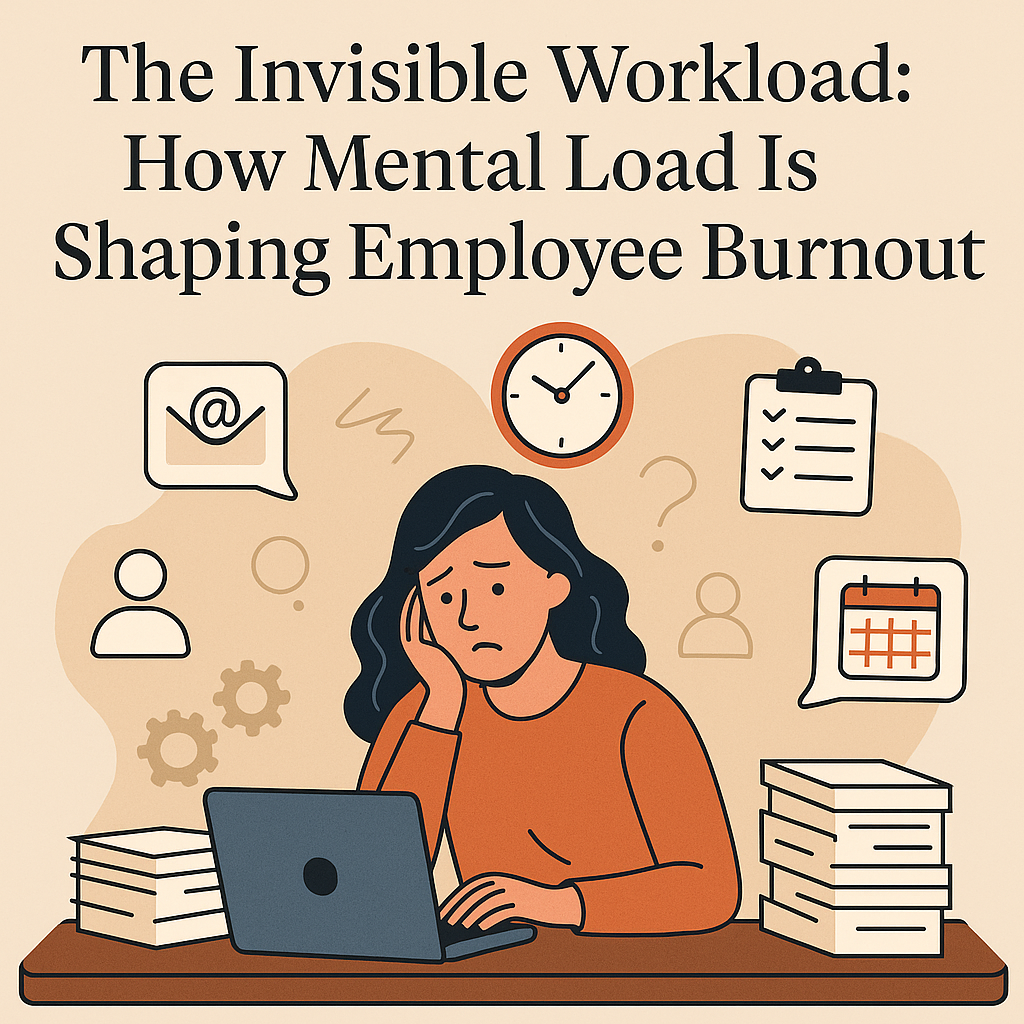
Not all work is visible on a timesheet. Beyond deadlines, deliverables, and meetings lies an often unacknowledged burden the mental load. It’s the to do list running in the background: remembering follow-ups, anticipating team needs, emotional labor, and constantly switching between tasks. Over time, this invisible workload becomes a major contributor to employee burnout.
Employees may look calm on the outside, yet mentally they’re juggling ten things at once keeping track of emails, project nuances, client expectations, and even office dynamics. This cognitive overload leads to fatigue, reduced focus, and emotional exhaustion. What’s worse, it often goes unnoticed because it doesn’t appear on dashboards or daily reports.
So, what can HR and leadership do? The first step is acknowledgement create safe spaces for conversations about mental strain. Encourage managers to check in regularly, not just about performance but about capacity. Promote task clarity, reasonable workloads, and realistic deadlines. Small acts like simplifying processes, reducing unnecessary meetings, or rotating responsibilities can ease the hidden burden.
Mental load is real. It drains energy, stifles creativity, and slowly chips away at motivation. By making the invisible visible, organizations can foster healthier workplaces where burnout is the exception not the norm.