


In today’s rapidly evolving work culture, HR has taken center stage in driving both people and performance. But to truly make an impact, HR leaders need to go beyond vanity numbers and focus on metrics that reflect real organizational health and growth. In 2025, one of the most critical metrics to track is quality of hire, which evaluates whether new employees are actually contributing meaningfully over time. This blends performance ratings, cultural fit, and early retention data. Similarly, employee experience scores derived from feedback surveys and pulse checks—are replacing generic engagement metrics, offering deeper insight into how connected and valued employees feel.
Another emerging must-track is internal mobility rate. Organizations that promote from within and encourage cross-functional growth are not only retaining top talent longer but also improving team adaptability. Time to productivity is a game-changing metric that measures how long new hires take to reach optimal performance, directly tying onboarding processes to business outcomes. Learning agility and upskilling rates are also crucial now, especially in tech-driven industries where skills become obsolete fast. Finally, manager effectiveness based on team growth, retention, and engagement—is increasingly being used to hold leadership accountable.
These aren’t just HR metrics—they’re business metrics. Tracking them right can mean the difference between surviving and thriving in the modern workplace.
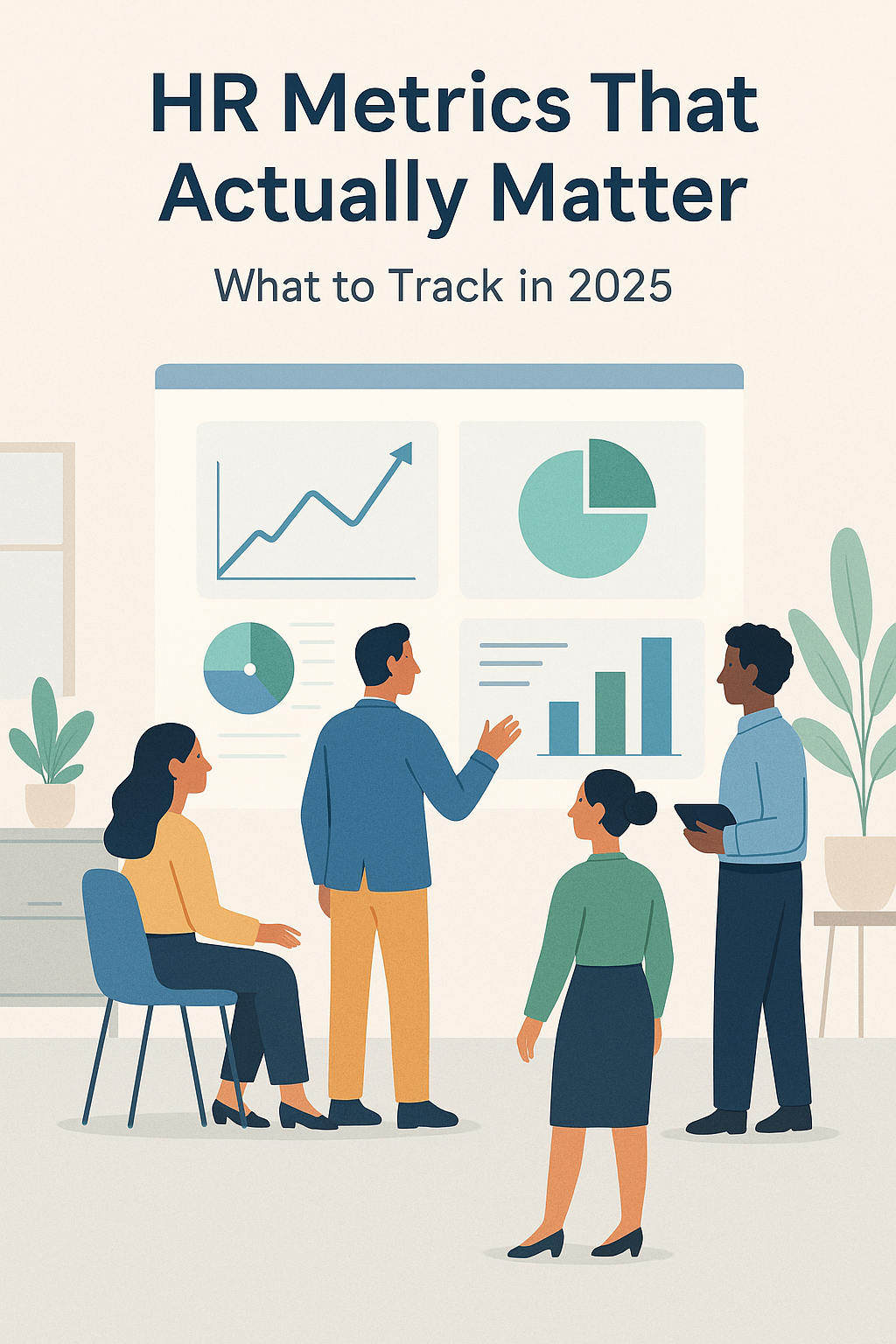
In today’s rapidly evolving work culture, HR has taken center stage in driving both people and performance. But to truly make an impact, HR leaders need to go beyond vanity numbers and focus on metrics that reflect real organizational health and growth. In 2025, one of the most critical metrics to track is quality of hire, which evaluates whether new employees are actually contributing meaningfully over time. This blends performance ratings, cultural fit, and early retention data. Similarly, employee experience scores derived from feedback surveys and pulse checks—are replacing generic engagement metrics, offering deeper insight into how connected and valued employees feel.
Another emerging must-track is internal mobility rate. Organizations that promote from within and encourage cross-functional growth are not only retaining top talent longer but also improving team adaptability. Time to productivity is a game-changing metric that measures how long new hires take to reach optimal performance, directly tying onboarding processes to business outcomes. Learning agility and upskilling rates are also crucial now, especially in tech-driven industries where skills become obsolete fast. Finally, manager effectiveness based on team growth, retention, and engagement—is increasingly being used to hold leadership accountable.
These aren’t just HR metrics—they’re business metrics. Tracking them right can mean the difference between surviving and thriving in the modern workplace.