


When people hear the word “branding,” they instinctively think of marketing logos, campaigns, and advertising. But when it comes to employer branding, the real hero behind the curtain should be HR. Why? Because employer branding is not about what a company says it’s about how it feels to work there.
Marketing can craft a compelling narrative. But HR is the one writing the actual story. HR knows the heartbeat of the organization what employees truly value, the workplace culture, and the day-to-day experiences that shape retention and reputation. While marketing sells products, HR shapes people’s perception of working with those who build them.
From onboarding to exit interviews, every touchpoint in the employee journey is branding in action. A great careers page, engaging LinkedIn presence, team testimonials, DEI initiatives, recognition programs, and internal culture videos these should stem from HR’s deep understanding of employee motivation and organizational values.
When employer branding is handled solely by marketing, it can become overly polished and disconnected from reality. This is why Glassdoor reviews often expose a mismatch between brand image and actual experience. HR, with its proximity to talent and organizational truth, can ensure the employer brand is authentic, credible, and sustainable.
Of course, collaboration between HR and marketing is ideal. Marketing brings amplification; HR brings insight. But the lead must come from HR because employer branding isn’t a campaign. It’s a culture, and no one understands that better than the people who build it from the inside out.
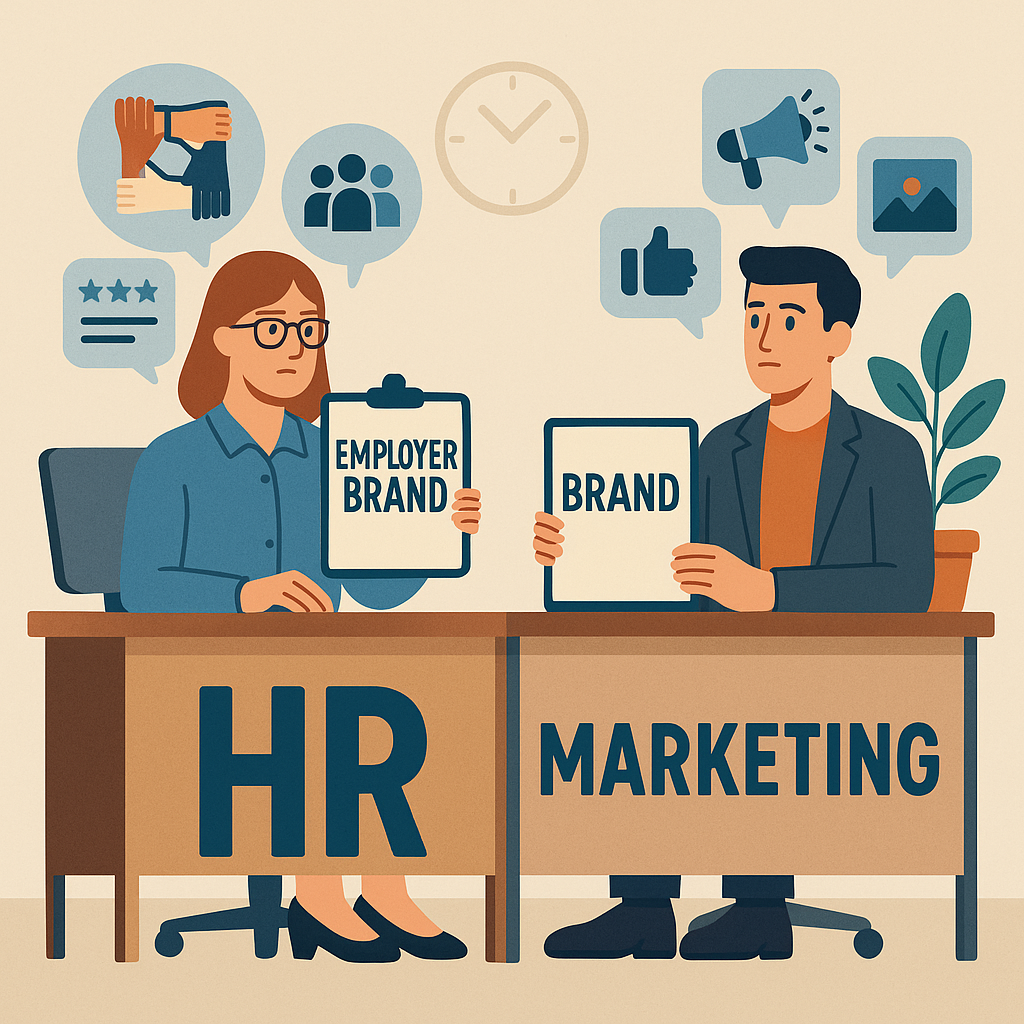
When people hear the word “branding,” they instinctively think of marketing logos, campaigns, and advertising. But when it comes to employer branding, the real hero behind the curtain should be HR. Why? Because employer branding is not about what a company says it’s about how it feels to work there.
Marketing can craft a compelling narrative. But HR is the one writing the actual story. HR knows the heartbeat of the organization what employees truly value, the workplace culture, and the day-to-day experiences that shape retention and reputation. While marketing sells products, HR shapes people’s perception of working with those who build them.
From onboarding to exit interviews, every touchpoint in the employee journey is branding in action. A great careers page, engaging LinkedIn presence, team testimonials, DEI initiatives, recognition programs, and internal culture videos these should stem from HR’s deep understanding of employee motivation and organizational values.
When employer branding is handled solely by marketing, it can become overly polished and disconnected from reality. This is why Glassdoor reviews often expose a mismatch between brand image and actual experience. HR, with its proximity to talent and organizational truth, can ensure the employer brand is authentic, credible, and sustainable.
Of course, collaboration between HR and marketing is ideal. Marketing brings amplification; HR brings insight. But the lead must come from HR because employer branding isn’t a campaign. It’s a culture, and no one understands that better than the people who build it from the inside out.