


Many companies proudly state they have an “open-door policy”—a promise that leaders are always available to listen. But here’s the real question: are employees actually walking through that door?
Too often, the open-door policy exists in theory but not in practice. Employees may hesitate to approach leadership due to fear of judgment, past experiences of being ignored, or a belief that nothing will change. A policy without psychological safety is just a plaque on the wall.
HR needs to evaluate not just if the door is open, but if it’s welcoming. Are managers approachable? Do employees feel heard when they raise concerns? Are there alternative feedback channels for those who are shy or introverted?
Creating a culture of openness takes more than keeping an office door ajar. It means leaders proactively checking in, encouraging honest dialogue, and demonstrating that feedback leads to real outcomes.
If your team isn’t speaking up, it’s not because they have nothing to say—it might be because your “open door” feels closed in every other way.
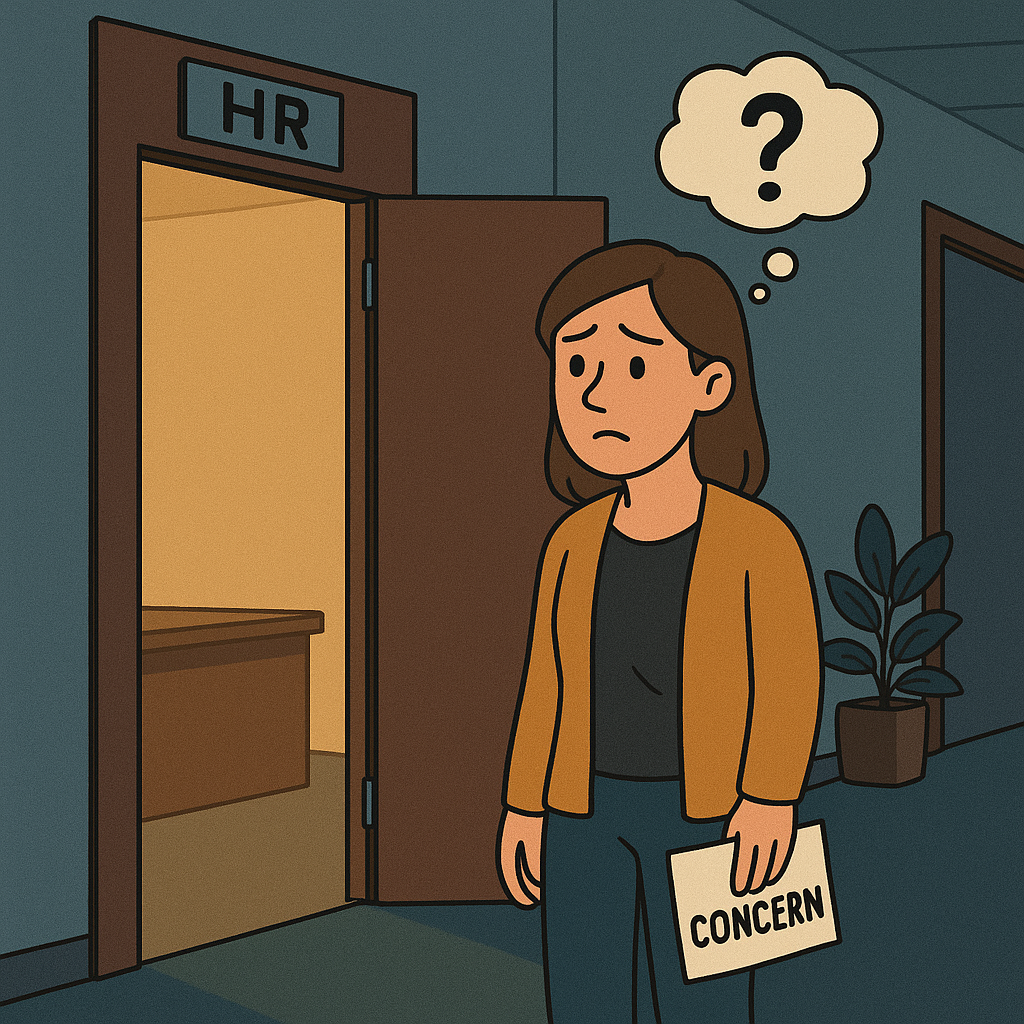
Many companies proudly state they have an “open-door policy”—a promise that leaders are always available to listen. But here’s the real question: are employees actually walking through that door?
Too often, the open-door policy exists in theory but not in practice. Employees may hesitate to approach leadership due to fear of judgment, past experiences of being ignored, or a belief that nothing will change. A policy without psychological safety is just a plaque on the wall.
HR needs to evaluate not just if the door is open, but if it’s welcoming. Are managers approachable? Do employees feel heard when they raise concerns? Are there alternative feedback channels for those who are shy or introverted?
Creating a culture of openness takes more than keeping an office door ajar. It means leaders proactively checking in, encouraging honest dialogue, and demonstrating that feedback leads to real outcomes.
If your team isn’t speaking up, it’s not because they have nothing to say—it might be because your “open door” feels closed in every other way.