


In a world wired for instant replies, many workplaces have quietly adopted a new metric of loyalty: constant availability. The “ping” of a late-night message. The expectation of a Sunday reply. The Slack notification during dinner.
It doesn’t show up in salary slips or KPIs—but the cost is real.
Availability ≠ Productivity
The assumption that being online equals being efficient is flawed. When employees feel like they must be “always on,” they:
Burn out faster
Produce shallow work
Avoid taking breaks that actually fuel creativity
This culture punishes deep work and rewards performative busyness.
The Psychological Toll
What begins as dedication quickly turns into anxiety. Employees begin to:
Check emails obsessively
Feel guilty for logging off
Skip vacations or feel pressure to “check in” during leave
The result? High-functioning burnout: when someone looks fine but is emotionally and mentally drained.
Why It’s a Leadership Problem
This isn’t an employee issue—it’s a top-down signal. If leaders send late-night emails or praise those who reply “anytime,” they unknowingly set the norm.
HR must partner with leadership to shift this messaging. It starts with policy but sticks through example.
Fixing It Without Killing Agility
Balance matters. Some roles do require flexibility. But boundaries can co-exist with responsiveness.
Here’s what HR can do:
Implement “No message after 7 PM” norms
Encourage delayed-send options
Promote “Deep Work Hours” with no meetings or pings
Model logging off publicly and proudly
Final Word
Being reachable at all times might feel like a superpower, but it’s a slow leak on your company’s most important resource—your people. Don’t reward burnout. Respect balance.
That’s how high-performance cultures truly scale.
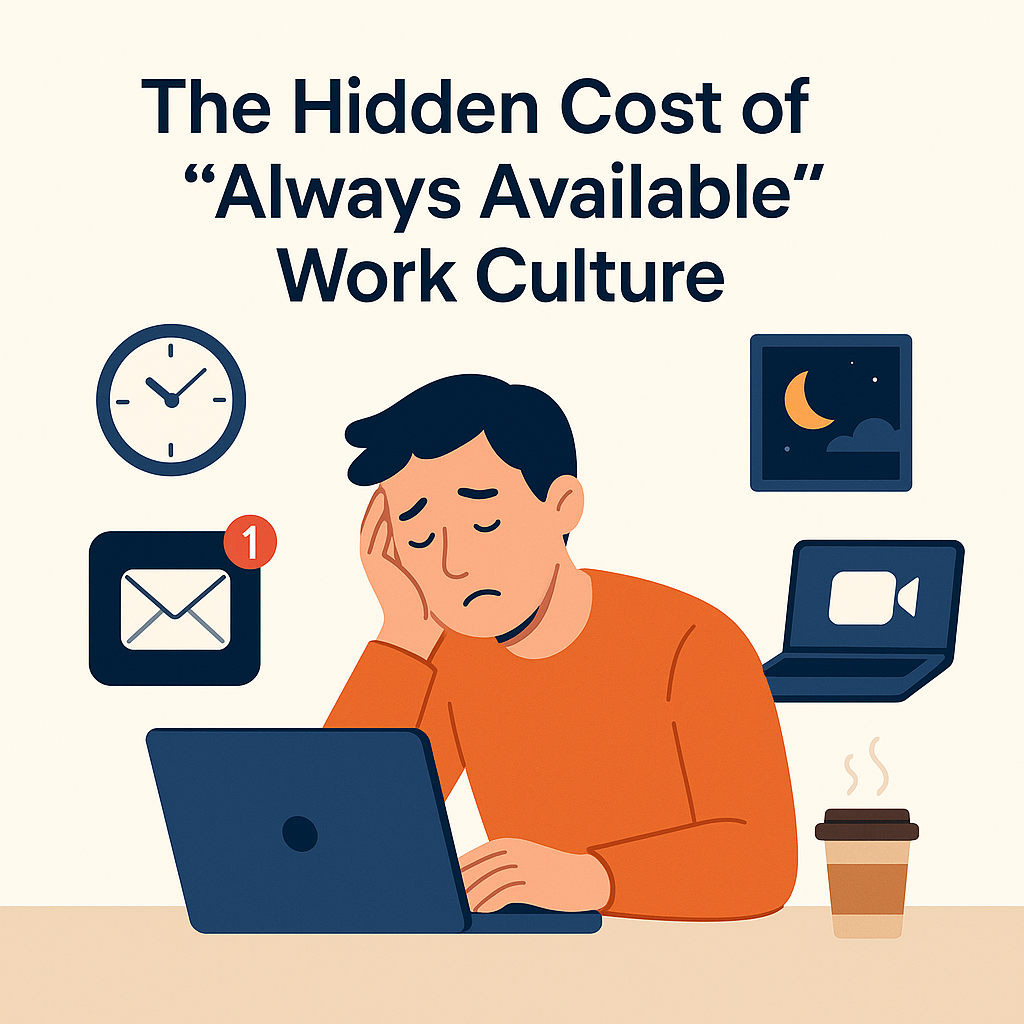
In a world wired for instant replies, many workplaces have quietly adopted a new metric of loyalty: constant availability. The “ping” of a late-night message. The expectation of a Sunday reply. The Slack notification during dinner.
It doesn’t show up in salary slips or KPIs—but the cost is real.
Availability ≠ Productivity
The assumption that being online equals being efficient is flawed. When employees feel like they must be “always on,” they:
Burn out faster
Produce shallow work
Avoid taking breaks that actually fuel creativity
This culture punishes deep work and rewards performative busyness.
The Psychological Toll
What begins as dedication quickly turns into anxiety. Employees begin to:
Check emails obsessively
Feel guilty for logging off
Skip vacations or feel pressure to “check in” during leave
The result? High-functioning burnout: when someone looks fine but is emotionally and mentally drained.
Why It’s a Leadership Problem
This isn’t an employee issue—it’s a top-down signal. If leaders send late-night emails or praise those who reply “anytime,” they unknowingly set the norm.
HR must partner with leadership to shift this messaging. It starts with policy but sticks through example.
Fixing It Without Killing Agility
Balance matters. Some roles do require flexibility. But boundaries can co-exist with responsiveness.
Here’s what HR can do:
Implement “No message after 7 PM” norms
Encourage delayed-send options
Promote “Deep Work Hours” with no meetings or pings
Model logging off publicly and proudly
Final Word
Being reachable at all times might feel like a superpower, but it’s a slow leak on your company’s most important resource—your people. Don’t reward burnout. Respect balance.
That’s how high-performance cultures truly scale.