


When we talk about training and development, it’s easy to focus on entry-level and mid-level employees. But here’s a hard truth HR professionals know all too well—the higher up the ladder you go, the harder it becomes to initiate change. And yet, organizations grow (or crumble) based on the openness of their leadership to learn, adapt, and evolve.
So the real question is: Is your leadership team coachable?
Why Coachability Matters at the Top
Leaders set the tone for culture, accountability, and performance. But when leaders stop being receptive to feedback—due to ego, comfort, or hierarchy—organizations stagnate. A coachable leader is:
Open to feedback without defensiveness
Self-aware of their impact
Willing to act on insights
Curious rather than controlling
Without this mindset, leadership becomes a bottleneck instead of a catalyst.
HR’s Invisible Battle
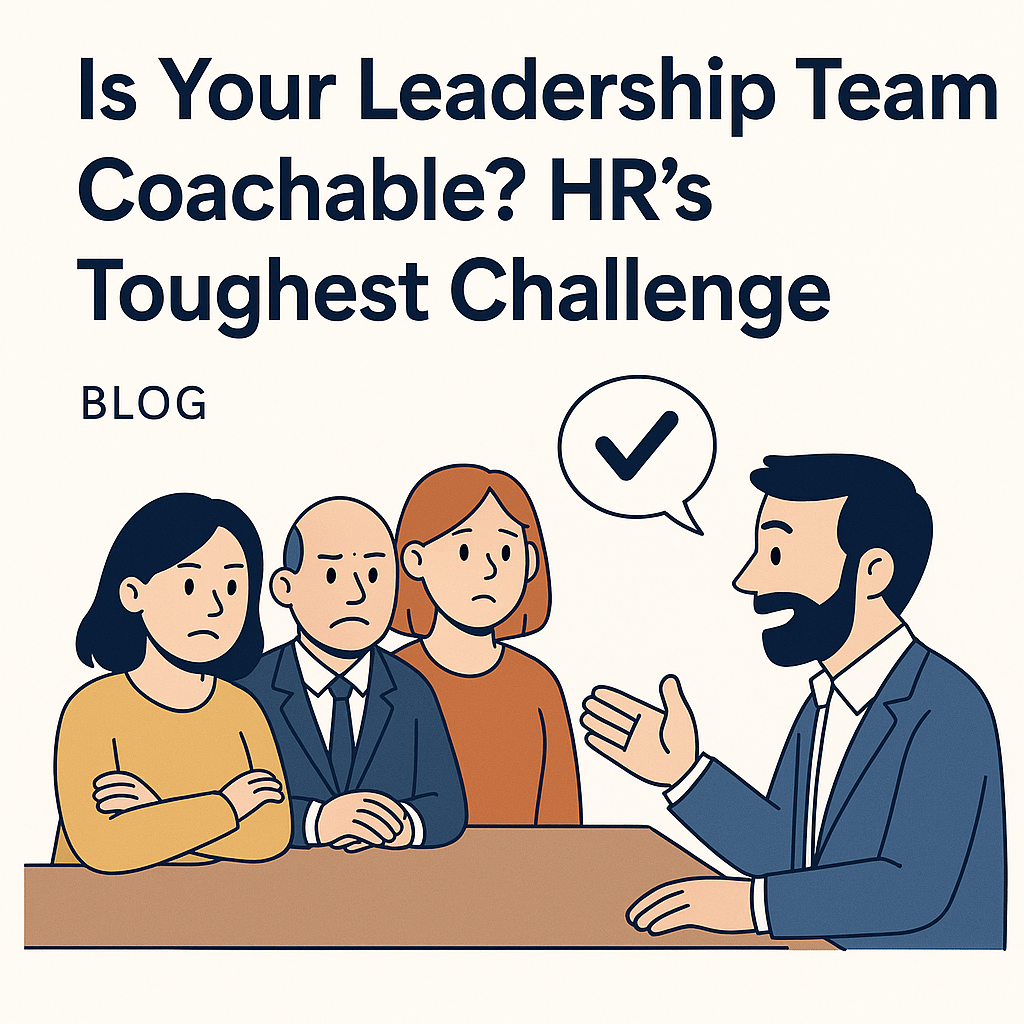
HR often walks a tightrope—balancing strategic influence while navigating fragile leadership egos. Telling a senior leader they need coaching can feel like navigating a minefield. But avoiding the conversation only enables blind spots to deepen.
The hardest part? Coachability isn’t about skill—it’s about mindset. And that’s hard to measure, harder to develop, and hardest to demand from the top.
How to Assess Coachability in Leaders
Use subtle but strategic cues:
Do they interrupt more than they listen?
Do they dismiss feedback as “not relevant”?
Do they take accountability or shift blame down the hierarchy?
Conduct 360-degree reviews, encourage executive coaching, and observe how they handle conflict or failure.
The Breakthrough Only Happens with Buy-In
You can’t force growth. But you can make the case. Share data, highlight blind spots backed by feedback, and create a safe container where leaders can evolve without judgment. HR’s role isn’t to push—it’s to invite reflection and facilitate transformation.
Final Thought
Coachability isn’t a weakness—it’s a leadership superpower. And HR’s toughest challenge isn’t developing teams. It’s helping those who lead them become the kind of people others want to follow
When we talk about training and development, it’s easy to focus on entry-level and mid-level employees. But here’s a hard truth HR professionals know all too well—the higher up the ladder you go, the harder it becomes to initiate change. And yet, organizations grow (or crumble) based on the openness of their leadership to learn, adapt, and evolve.
So the real question is: Is your leadership team coachable?
Why Coachability Matters at the Top
Leaders set the tone for culture, accountability, and performance. But when leaders stop being receptive to feedback—due to ego, comfort, or hierarchy—organizations stagnate. A coachable leader is:
Open to feedback without defensiveness
Self-aware of their impact
Willing to act on insights
Curious rather than controlling
Without this mindset, leadership becomes a bottleneck instead of a catalyst.
HR’s Invisible Battle
HR often walks a tightrope—balancing strategic influence while navigating fragile leadership egos. Telling a senior leader they need coaching can feel like navigating a minefield. But avoiding the conversation only enables blind spots to deepen.
The hardest part? Coachability isn’t about skill—it’s about mindset. And that’s hard to measure, harder to develop, and hardest to demand from the top.
How to Assess Coachability in Leaders
Use subtle but strategic cues:
Do they interrupt more than they listen?
Do they dismiss feedback as “not relevant”?
Do they take accountability or shift blame down the hierarchy?
Conduct 360-degree reviews, encourage executive coaching, and observe how they handle conflict or failure.
The Breakthrough Only Happens with Buy-In
You can’t force growth. But you can make the case. Share data, highlight blind spots backed by feedback, and create a safe container where leaders can evolve without judgment. HR’s role isn’t to push—it’s to invite reflection and facilitate transformation.
Final Thought
Coachability isn’t a weakness—it’s a leadership superpower. And HR’s toughest challenge isn’t developing teams. It’s helping those who lead them become the kind of people others want to follow