


In the earliest days of a startup, HR is often seen as a checklist function—process payroll, file offer letters, set up leave tracking. It’s mostly administrative, mostly reactive. But as startups scale, so do their people challenges. And those that don’t evolve their HR function beyond operations soon feel the cost—misalignment, attrition, broken culture, and stalled growth.
The truth is, HR’s greatest value doesn’t lie in policy enforcement or paperwork—it lies in people architecture. Startups that survive the chaos of growth are the ones that move HR from the back-office to the boardroom, from admin to strategic. But this transition doesn’t happen overnight—it follows a map.
In Stage 1, the startup hires an HR generalist or office manager wearing multiple hats. The focus is compliance, onboarding, and admin. It’s essential groundwork—but if HR stays stuck here, they become a bottleneck. Stage 2 emerges when leadership realizes they don’t just need someone to manage people—they need someone to build systems for hiring, performance, and culture. At this stage, HR starts introducing structured feedback loops, refining values, and identifying culture gaps.
Then comes Stage 3: HR is no longer just supporting the business—they’re helping to drive it. They’re in investor meetings talking about team strategy. They’re helping department heads navigate conflict, define career paths, and track engagement data. HR is now shaping the DNA of how the company scales—intentionally.
This evolution is critical. If HR doesn’t grow with the company, it becomes outdated fast. But when it does grow, it becomes the compass that keeps fast-moving teams aligned with vision, values, and velocity.
So if you’re a startup founder, ask yourself: Is your HR team just checking boxes, or are they shaping the future? Because the startups that win long-term are the ones that treat HR not as overhead—but as strategy.
In the earliest days of a startup, HR is often seen as a checklist function—process payroll, file offer letters, set up leave tracking. It’s mostly administrative, mostly reactive. But as startups scale, so do their people challenges. And those that don’t evolve their HR function beyond operations soon feel the cost—misalignment, attrition, broken culture, and stalled growth.
The truth is, HR’s greatest value doesn’t lie in policy enforcement or paperwork—it lies in people architecture. Startups that survive the chaos of growth are the ones that move HR from the back-office to the boardroom, from admin to strategic. But this transition doesn’t happen overnight—it follows a map.
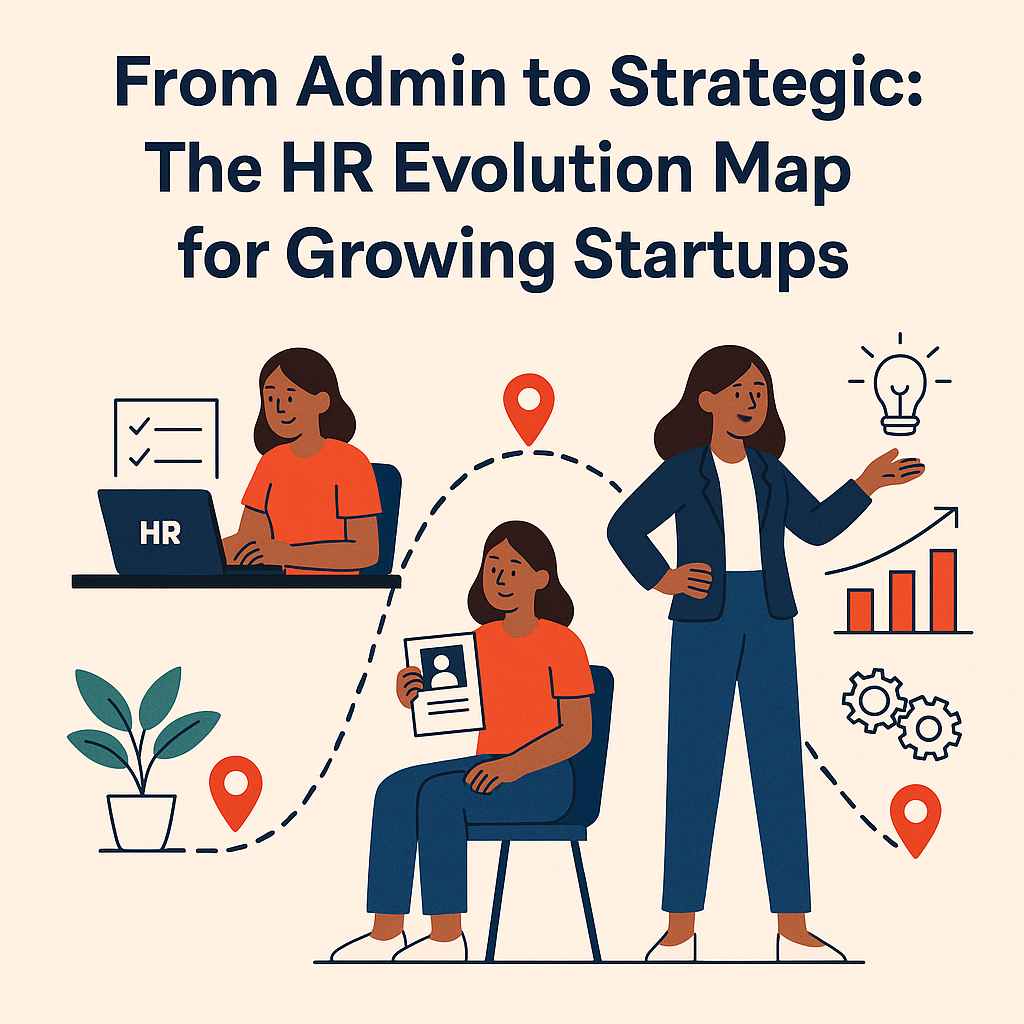
In Stage 1, the startup hires an HR generalist or office manager wearing multiple hats. The focus is compliance, onboarding, and admin. It’s essential groundwork—but if HR stays stuck here, they become a bottleneck. Stage 2 emerges when leadership realizes they don’t just need someone to manage people—they need someone to build systems for hiring, performance, and culture. At this stage, HR starts introducing structured feedback loops, refining values, and identifying culture gaps.
Then comes Stage 3: HR is no longer just supporting the business—they’re helping to drive it. They’re in investor meetings talking about team strategy. They’re helping department heads navigate conflict, define career paths, and track engagement data. HR is now shaping the DNA of how the company scales—intentionally.
This evolution is critical. If HR doesn’t grow with the company, it becomes outdated fast. But when it does grow, it becomes the compass that keeps fast-moving teams aligned with vision, values, and velocity.
So if you’re a startup founder, ask yourself: Is your HR team just checking boxes, or are they shaping the future? Because the startups that win long-term are the ones that treat HR not as overhead—but as strategy.